 Amsterdam Windmill Tours
The Best Time to Visit Zaanse Schans, Month by Month and Hour by Hour
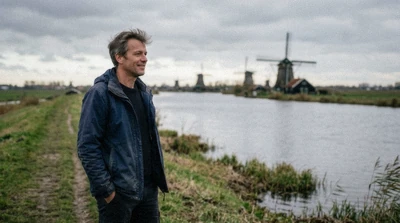
The best time to visit Zaanse Schans is not a month, it is a ninety-minute window: from the 9:00 opening until the first coaches land around half past ten. Get that right and July feels manageable; get it wrong and a quiet Tuesday in October feels crowded. Month still matters for two things, which mills are turning and how much daylight you get, so this is both: the hours that decide your visit, and the year laid out so you know what is open when.
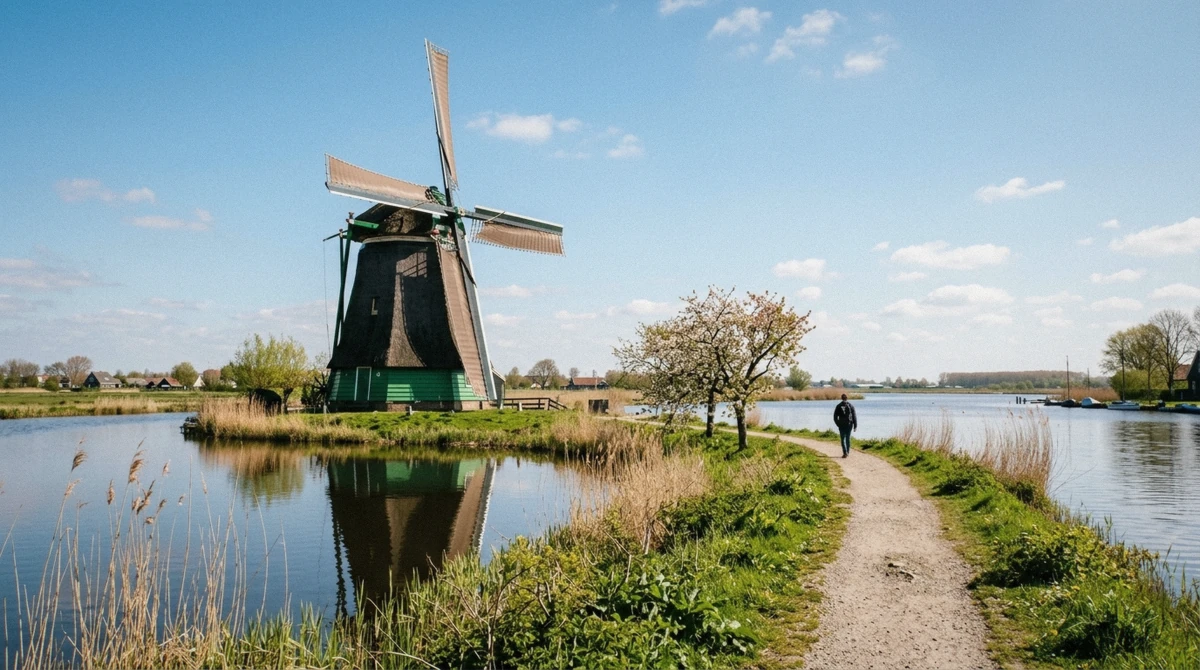
Quick answer
Come between 9:00 and 10:30 on any day of the year and Zaanse Schans is a quiet working village. May, June and September give the best combination of open mills, long daylight and tolerable crowds. July and August are the busiest weeks of the year. From November through March two of the six open mills shut, the site empties out, and the light on the water is the best it gets.
Key takeaways
- Best hour, any month: 9:00 to 10:30, before the coaches arrive
- Best months overall: May, June and September, warm enough and everything open
- Busiest: mid-April to mid-May for tulip season, then July and August
- Quietest: November to February, with De Zoeker and De Bonte Hen closed
- Keukenhof runs 18 March to 9 May 2027, which is what makes spring crowded
- Doing it with a coach? Windmill day trips from Amsterdam run all year from $34
The Year at Zaanse Schans
Month by Month
The site never closes, but what is turning changes. Temperatures below are rounded monthly averages for the Amsterdam area rather than forecasts, and the wind is the number people underestimate: this is a river bank in an open polder, and it feels four degrees colder than the same day in the city.
| Month | Average high | Crowds | What is open |
|---|---|---|---|
| January to February | 6 °C | Lowest of the year | Four mills; the two oil mills shut |
| March | 10 °C | Rising after mid-month | Oil mills reopen; Keukenhof opens 18 March |
| April | 14 °C | Very busy, tulip season | Everything |
| May | 18 °C | Busy, especially before 9 May | Everything |
| June | 21 °C | Busy but spread out | Everything |
| July to August | 23 °C | Peak of the year | Everything |
| September | 20 °C | Easing off, the sweet spot | Everything |
| October | 15 °C | Quiet on weekdays | Everything until the end of the month |
| November to December | 8 °C | Quiet, apart from Christmas week | Four mills; the two oil mills shut |
Spring: Everything Open, Everyone There
From mid-March the two oil mills, De Zoeker and De Bonte Hen, restart and all six are running. That is also when Keukenhof opens, on 18 March in 2027, and the tulip traffic reaches the Zaan whether or not the tulips are anywhere near it.
April is the busiest month that is not July. Coach parks fill by ten, the clog workshop queues, and the paths in front of the green houses stop being walkable around midday. It is still worth coming; it is not worth coming at eleven.
May after the ninth, when Keukenhof shuts, is quietly one of the best weeks of the year: everything open, long days, and the tulip crowd gone home.
Summer: Long Days, Peak Crowds
July and August bring the year's warmest weather, around 23 °C, and the year's densest visitors. There is almost no shade on the site, which catches people out on the hot days.
The compensation is daylight. It stays light until half past nine in late June, and the mills close at 16:30, so the last two hours of the day are yours: the coaches have gone, the light comes low across the water, and the village looks like the reason you came.
If your only free day is in August, come at nine or come at five. The middle belongs to the tour buses.
Autumn and Winter: The Underrated Half
September is the best single month if you want everything open without the peak crowds. October is quiet on weekdays and the light turns golden by four in the afternoon.
From November through March you lose the two oil mills and gain the place almost to yourself. Four working mills is still four more than most people see, and De Kat, the paint mill, runs all year. Dress for wind rather than temperature: the polder has nothing to break it, and 6 °C on this dike feels like 2 °C in Amsterdam.
December brings one busy week around Christmas, when the village strings lights along the dike. It is genuinely lovely and genuinely packed.
The Hour Matters More Than the Month
How a Day Fills Up
Zaanse Schans took 2.6 million visitors in 2024, and they arrive on a schedule set by coach departure times from Amsterdam rather than by anything about the site.
| Time | What is happening | Worth being there? |
|---|---|---|
| 09:00 to 10:30 | Mills open, millers free to talk, empty paths | The best window of any day |
| 10:30 to 12:00 | Coaches arriving, queues forming at the demonstrations | Go inside a mill and let it pass |
| 12:00 to 15:30 | Peak. Paths busy, car park full | Only if you have no choice |
| 15:30 to 16:30 | Coaches leaving, mills closing one by one | Good, if you have already been inside |
| After 16:30 | Village empty, shops shut, best light on the water | For photographs, yes |
Weekdays, Weekends and the Dutch Holidays
Weekdays beat weekends by a clear margin outside July and August. Saturday afternoon is the worst combination in the calendar.
Watch the Dutch public holidays too: King's Day on 27 April, Ascension, Whit Monday and the school holidays in May and late July all push domestic day trippers onto the same dike. The village publishes a busyness calendar, and it is the one piece of official planning material worth checking before you set a date.
- Pick a weekday if you can, and avoid Saturday afternoon entirely
- Check the Dutch school holidays for May and late July
- Avoid King's Day, 27 April, unless crowds are the point
- In winter, check which mills are turning before you travel
- Whatever the month, aim to be over the Julianabrug by 9:15
What the Weather Actually Does to a Visit
Rain does not close anything. The mills, the workshops, the cheese farm and the museums are all indoors once you are through the door, and the site runs in any weather.
Wind is the real variable, and it cuts both ways. Too little and nothing turns, which takes the point out of a working mill. Too much and the miller furls the sails and stops the machinery for safety. A brisk day with the sails moving is worth planning around, and the forecast tells you more about your visit than the temperature does.
One practical note for winter: mills close at 16:30 and the sun is down by half past four in December, so a winter visit is a morning visit whether you meant it to be or not. Getting there takes 17 minutes by train, which makes an early start easier than it sounds.
How the Season Changes the Trip Itself
Two things shift with the calendar that have nothing to do with the weather.
The first is daylight at either end. In late June it is light from five in the morning until half past nine at night, so an early train and a late walk both work. In December the sun is up at half past eight and gone by half past four, which turns the visit into a morning whether you planned it that way or not.
The second is what the tours do. The tulips and windmills day exists only between 18 March and 9 May; outside that, every trip from Amsterdam is a windmill and fishing-village day. Coach frequency also thins in January and February, so there is less to choose from if you want to be driven.
Winter has one more advantage nobody advertises. With the crowds gone, millers have time to talk, and a quiet Tuesday in February buys you a twenty-minute explanation of how an oil press works from someone who does it for a living.
What to Wear, by Season
The polder wind is the whole story. Amsterdam sits in a built-up basin; the Zaan dike does not.
- Spring: a windproof shell over a layer, and shoes that survive wet grass
- Summer: sun protection, since there is almost no shade anywhere on the site
- Autumn: waterproof outer layer, and something warm for the walk from the station
- Winter: proper coat, hat and gloves, and expect it to feel several degrees colder than the forecast for Amsterdam
When Should You Go?
If You want everything open with fewest people
September or the second half of May, on a weekday morning.
If You are here for the tulips as well
Mid-April, and accept the crowds. Keukenhof runs 18 March to 9 May 2027.
If You hate crowds more than you hate wind
November to February. Four mills instead of six, and the dike path to yourself.
If Your only free day is in August
Go at 9:00 or after 16:00, never in between.
If You want the fishing villages in the same day
Any month: the coach tours to the windmills run all year and cover up to four stops.
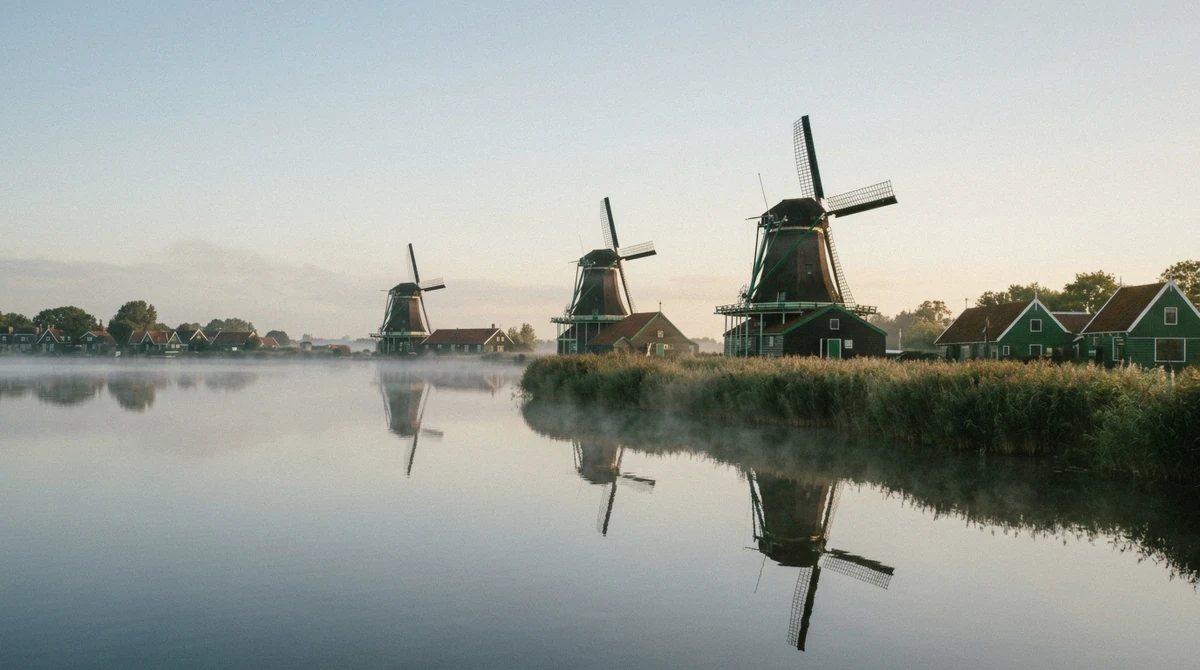
Quarter past nine in September. The same view at noon in July has four coaches in the car park behind it.
Questions About Timing a Visit
What is the best time of day to visit Zaanse Schans?
Between the 9:00 opening and about 10:30, when the first coaches arrive. That window works in every month of the year and matters more than which month you pick. The hour after the mills close at 16:30 is the second-best, though you cannot go inside anything by then.
What is the best month to visit Zaanse Schans?
September, or the second half of May. Both give you all six mills open, long daylight and fewer people than the April to August stretch. April is the busiest non-summer month because of Keukenhof.
Is Zaanse Schans worth visiting in winter?
Yes, with two caveats. De Zoeker and De Bonte Hen close from November through March, so four mills are open rather than six, and the light goes by half past four in December. In exchange you get a fraction of the crowds and the best reflections of the year.
When are the windmills at Zaanse Schans turning?
Whenever the wind suits, which is most days but not all. Too little wind and nothing moves; too much and the miller furls the sails for safety. Check the forecast rather than the calendar, and see which mills open when for the seasonal closures.
How busy is Zaanse Schans in summer?
July and August are the peak of the year, on top of 2.6 million annual visitors. There is almost no shade on the site, and the paths in front of the green houses are shoulder to shoulder by midday. Early morning is the answer, not a different month.
Does rain close Zaanse Schans?
No. The mills, the workshops, the cheese farm and the museums all continue in any weather, and rain thins the crowds noticeably. Wind is the thing that changes what you see, since the sails stop in a dead calm and in a gale alike.
When is tulip season near Zaanse Schans?
Mid-March to mid-May, with peak bloom usually in mid-April. Keukenhof opens 18 March and closes 9 May in 2027, and the tulips and windmills day tour only runs inside that window.