 Amsterdam Windmill Tours
Zaanse Schans With Kids: What Holds Their Attention and What Does Not
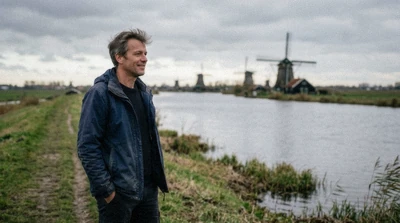
Zaanse Schans with kids works better than most heritage sites because almost nothing here is behind glass. A man carves a clog out of a block of wood in four minutes, a cheese farm hands out samples, there are sheep and geese in the field, and inside one mill two stone wheels the size of a table crush rock into blue powder. It is also a river bank with steep mill stairs and no fences in places, so this is what to do, in what order, and what to skip.
Quick answer
Zaanse Schans suits children from about four upwards, and the free parts carry the visit: the clog-carving demonstration, the cheese tasting, the animals in the field and the boats on the Zaan. Budget two to three hours, start at 9:00 before the coaches, and pick one mill interior rather than three. The stairs inside every mill are steep and narrow, so babies stay in a carrier rather than a pushchair, and the paths themselves are flat and easy.
Key takeaways
- Free and reliably popular: clog carving, cheese tasting, the animals, the water
- One mill interior is plenty; De Kat has the most to look at and a platform outside
- Mill stairs are ladder-steep: carriers yes, pushchairs no, past the ground floor
- Two to three hours is the honest attention span here
- Under-fours go free at the mills; ages 4 to 17 pay €3.75
- Coming without a car? Windmill day trips from Amsterdam include the coach both ways
What Works, by Age
The Things That Land
Four attractions do the heavy lifting and none of them needs a ticket.
The clog workshop is the best of them. A craftsman clamps a block of poplar into a lathe and produces a wearable shoe while children watch, in about four minutes, with the shavings flying. The room behind holds clogs in every size including a pair you could sleep in.
The cheese farm hands out samples on cocktail sticks, which turns a cheese lecture into a tasting game: mild against two-year aged, and most children pick the sharp one and then regret it loudly.
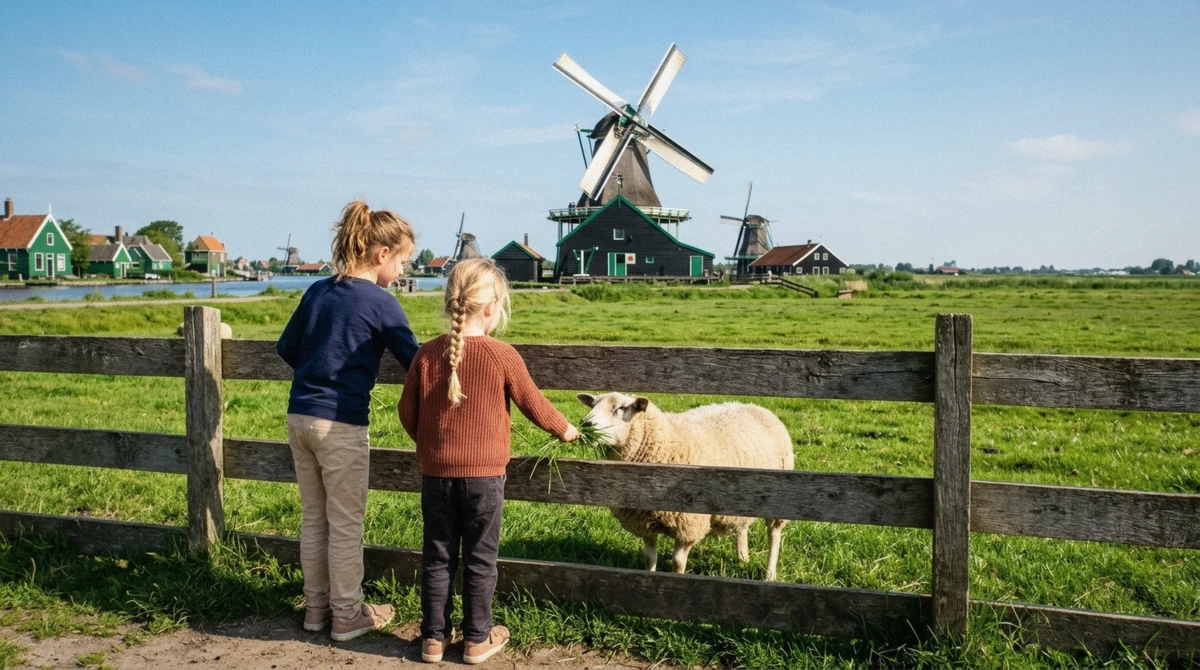
Behind the village there is a field with sheep, geese and, in spring, lambs. And there is the Zaan itself, with barges going past and a small boat crossing in summer.
| Age | What holds them | What to skip |
|---|---|---|
| 2 to 4 | Animals, boats, clog demonstration, running on flat paths | Every mill interior and the museums |
| 5 to 8 | Clogs being carved, cheese tasting, one mill from the inside | The Zaans Museum, the audio tour |
| 9 to 12 | De Kat's grinding stones, the sawmill in action, the mill platform | Nothing much; this is the best age here |
| Teenagers | The sawmill, the pigment story, photographs from the Julianabrug | The clog shop and the souvenir stretch |
Which Mill to Take Them Into
One, not three. De Kat is the pick: the stone runners are visibly enormous, the pigment is bright blue, and the outside platform gives a view over the whole river that turns into the day's best photograph.
Het Jonge Schaap is the alternative for children who like machines. It saws logs with a frame saw and the whole building shakes while it does it, which is far more dramatic than it sounds written down.
De Huisman takes ten minutes and smells of mustard, which is enough for smaller children who will not manage a climb.
Entry is €7.50 for adults and €3.75 for ages 4 to 17, and under-fours go free. The full ticket breakdown covers the combination options if you want more than one.
The Practical Warnings
The stairs inside the mills are closer to ladders than staircases: steep, narrow, with a rope instead of a handrail. Toddlers go on a back or a hip, not up on their own, and a pushchair does not leave the ground floor.
The paths themselves are flat, wide and easy, so a pushchair is fine for the village. The river bank is open in places with no railing, which is worth a look before you let a three-year-old run.
There is a pancake restaurant, De Kraai, and a couple of cafes, and both get busy at the exact moment the coaches do. Feed everyone before noon or bring something.
- Carrier rather than pushchair if you plan to go up a mill
- A card: several points on site take nothing else
- Layers, because the dike is windy even in July
- Snacks, since the cafes queue from midday
- A change of clothes for anyone likely to find the water interesting
A Morning That Works
The Order to Do It In
Start early and front-load the good bits. Children flag after about two hours here, so spend the fresh time on the things they will remember.
| Time | What | Why then |
|---|---|---|
| 09:10 | Walk in over the Julianabrug | The mill panorama, before any coach |
| 09:20 | De Kat, including the platform | Quiet, and the miller has time to explain |
| 10:00 | Clog workshop | The demonstration runs without a queue |
| 10:30 | Cheese farm and tasting | Just as the first coaches arrive |
| 11:00 | Animals in the field, boats on the river | Free running-around time |
| 11:45 | Pancakes at De Kraai, or the train home | Ahead of the lunch rush |
Getting There With Children
The train takes 17 minutes from Amsterdam Centraal to Zaandijk Zaanse Schans, then a ten-minute walk over the footbridge. That walk is pleasant with a four-year-old and long with a two-year-old.
Bus 391 takes 45 minutes and stops at the entrance, which removes the bridge and the walk entirely. With a pushchair, take the bus. Both options and their fares are laid out in how to get there.
A coach tour solves the transport differently: you get a seat both ways and the fishing villages as well, though the schedule is not yours and two hours on a bus is its own kind of test.
What About the Coach Tours
Most work fine with school-age children and less well with toddlers. The four-village days run 6.5 to 8 hours, which is a long time in a seat, and free time at each stop is measured in minutes.
One detail worth knowing before you book: on several operators babies need their own approved car seat, which they do not supply. Group sizes also vary enormously, from a coach of sixty down to the max-16 small group, and with children the smaller vehicle is worth the difference.
If your children are under five, the train and a morning is almost always the better plan.
Rainy Days and Toilets, the Two Parent Questions
Rain is not a reason to cancel. The clog workshop, the cheese farm, the mill interiors and all four museums are indoors, and the site is noticeably quieter in the wet. What ruins a wet visit is the walk from the station, so on a bad forecast take bus 391 to the entrance instead.
Toilets are at the visitor facilities near the car park end of the village and inside the museum buildings, and they are the usual heritage-site distance from wherever your child announces the emergency. Go before you cross the bridge.
One more small thing: the field animals are behind a low fence and the geese are entirely unbothered by children. Feeding them anything from the cafes is not encouraged.
What It Costs for a Family of Four
Two adults and two children, by train, with one mill between them, comes to about €45 for the morning. That is cheaper than most indoor attractions in Amsterdam and considerably cheaper than the four of you on a coach tour.
| Family of four | By train | By coach tour |
|---|---|---|
| Getting there | €28 return, children reduced | From $130 for four |
| One mill each | €22.50 with two children | €22.50, or included on some tours |
| Pancakes at De Kraai | About €40 | About €40 |
| Total | About €90 | From $170 |
| Time out | 4 hours | 5.5 to 8 hours |
Turning It Into a Whole Day
If the morning goes well and nobody has melted down, two extensions work with children.
The first is the boat. In summer a small ferry crosses the Zaan and there are short river trips from the village landing, which buys another half hour of goodwill for the price of a coffee.
The second is Zaandam itself, two stops back down the train line. The Inntel hotel there is a twelve-storey stack of about seventy traditional green house facades, and children who were bored by mill machinery tend to find it hilarious. It sits beside the station, so it costs nothing but the walk, and it is also the photo stop on the Lego houses small-group tour.
What we would not do with under-eights is add Volendam and Marken on the same day. That is a six-hour outing with two more bus legs, and the returns fall off sharply after lunch.
Planning It Around Your Children
If You have a baby or a toddler in a pushchair
Bus 391 to the gate, the free village, the animals, and skip every mill interior.
If Your children are five to eight
Train at 8:40, De Kat, the clog demonstration and the cheese farm. Home by lunch.
If Your children are nine and up
Add Het Jonge Schaap and the mill museum, and buy the €15 combination ticket.
If You want a full day out with the family
Take a coach tour to the windmills that adds Volendam and Marken, and pick the smallest group you can.
If It is raining hard
Come anyway: the mills, the workshop, the farm and the museums are all indoors once you are through the door.
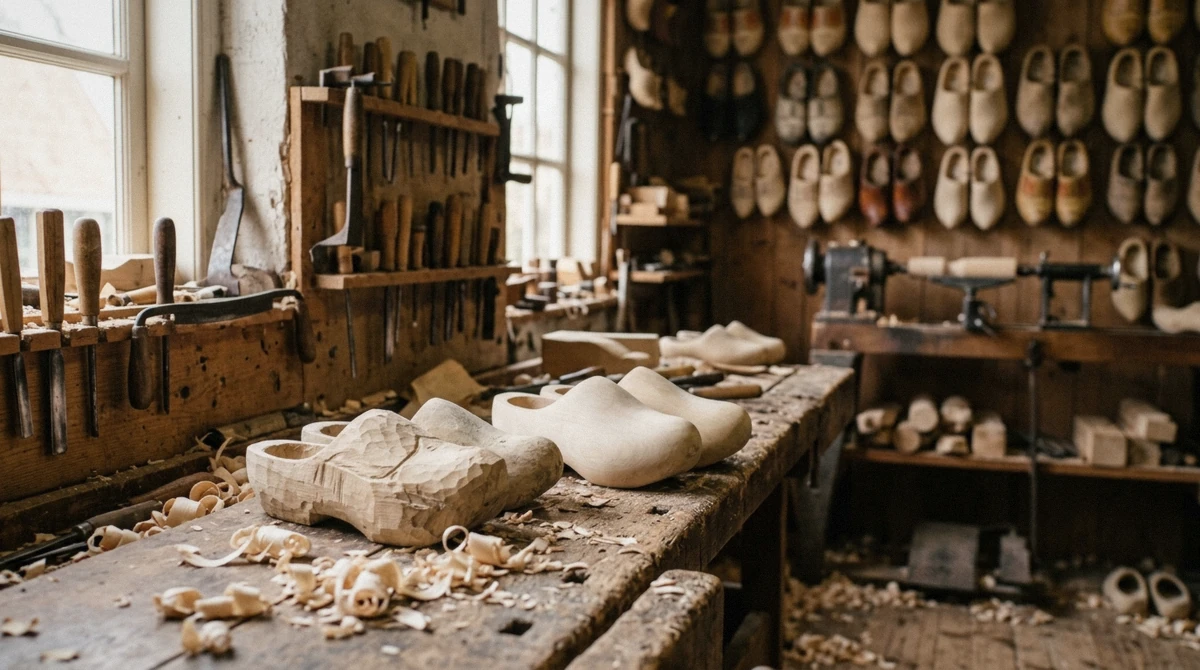
Four minutes from block to shoe, free to watch, and the single most reliable thing here for a five-year-old.
Questions From Parents
Is Zaanse Schans good for kids?
Yes, from about four upwards. The clog carving, the cheese tasting, the animals and the boats carry the visit, and they are all free. One mill interior adds the machinery without exhausting anyone.
How long should you spend at Zaanse Schans with children?
Two to three hours. Start at the 9:00 opening, do the mill first while everyone is fresh, then the demonstrations and the field, and leave before the lunch queues build.
Can you take a pushchair around Zaanse Schans?
Around the village, yes: the paths are flat, wide and mostly gravel or brick. Inside the mills, no. Every mill is entered by steep, narrow stairs closer to a ladder, so a carrier is the answer if you want to go up.
How much do children pay at Zaanse Schans?
Under-fours go free at the mills. Ages 4 to 17 pay €3.75 per mill, or €7.50 on the De Zaansche Molen combination ticket that covers every open mill plus the mill museum. The village itself costs nothing to enter.
Which windmill is best with children?
De Kat, for the huge grinding stones, the bright blue pigment and the platform outside. Het Jonge Schaap is the better pick for older children who like machinery, since the frame saw shakes the whole building.
Is there anywhere to eat with children?
De Kraai serves pancakes and there are a couple of cafes on site, all of which fill at midday when the coaches arrive. Eat early or bring snacks, and note that several points take cards only.
Are the coach tours suitable for young children?
School-age children usually manage them; toddlers often do not, since the four-village days run six to eight hours. Several operators also require babies to have their own approved car seat, which they do not provide.